**Inside Laifen's Zhuhai Super Factory: How a Single Motor Powers Its Journey to the Global Market** Recently, the author was invited to visit Laifen Technology's super factory in Zhuhai, Guangdong. During the tour, Laifen opened key production areas—including the motor workshop, the reliability laboratory, and the assembly workshop—to the media. This was no ordinary factory visit; it was more like an inquiry into "where good products come from." At a time when the industry is accustomed to competing on specs and speed, Laifen has chosen to put the answer back on the factory floor. 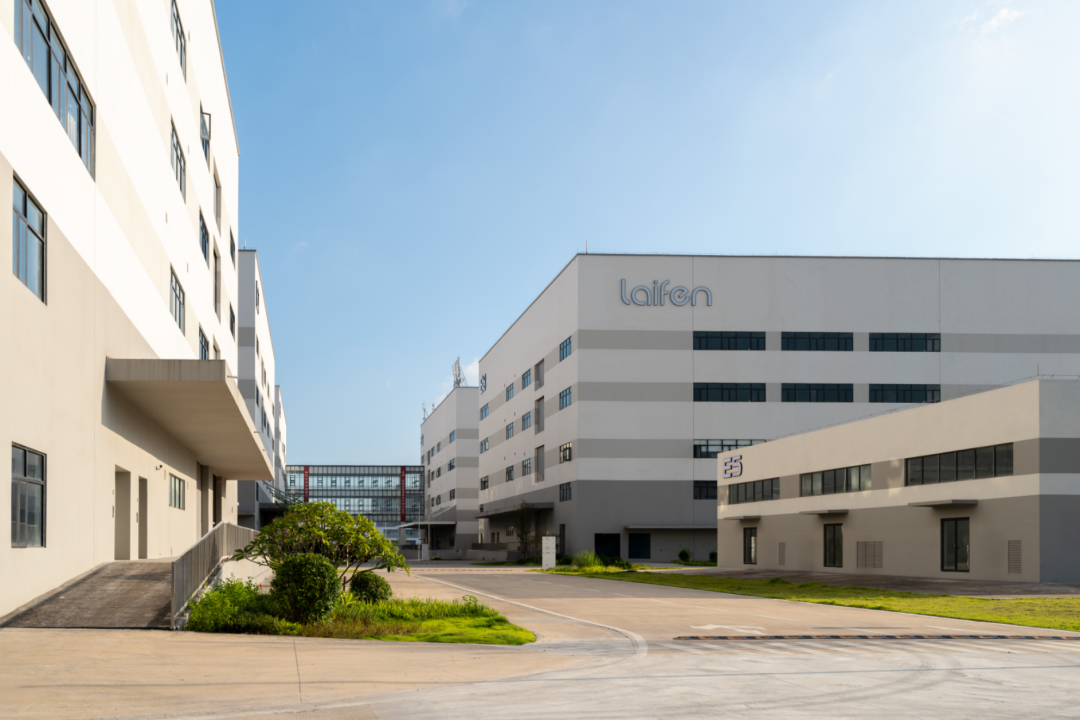
In Laifen's view, innovation is not luck—it is the ability to truly connect "insight, R&D, and manufacturing." A single innovation may come from inspiration, but sustained innovation is always a systems engineering effort. **1. To consistently deliver good products, must a brand get its own hands dirty?** Laifen's Zhuhai super factory went into production in August 2025. With a total investment exceeding RMB 500 million and covering more than 200,000 square meters, it supports product lines including hair dryers, electric toothbrushes, and shavers, with an annual production capacity in the tens of millions of units. But for Laifen, building a factory isn't just about "making things itself." More importantly, it's about keeping firm control of every step in the product experience that affects consumers. "Production is the tangible delivery of R&D and technology—we don't want that effort to be heavily discounted by contract manufacturers," a Laifen representative said on site. In the past, the personal-care small appliance industry long followed a path of "light R&D, rapid product launches, and heavy reliance on OEM manufacturing." Brands could bring products to market faster, but it was hard to truly enforce standards down to every single process. By choosing to build its own factory, Laifen is essentially answering another question: if a brand wants to consistently make good products over the long term, must it get its own hands dirty? From motors and molding, to spraying, assembly, and brush heads, Laifen brings every production step into its own manufacturing system. Through full-process in-house R&D and production plus digital traceability, it has built a quality loop that is controllable, verifiable, and continuously optimizable. Outsourcing solves the problem of "getting it made"; owning a factory solves the problem of "making it—extremely well, over the long term, consistently, and uniformly." 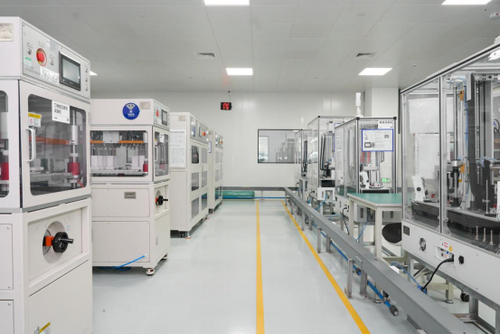
**2. Core power, fully self-developed and self-produced: building a production line from "0"** Stepping into the motor workshop, tiny stators, rotors, and bearings move along rows of high-speed production lines—going through machining, inspection, and assembly before becoming the core power components hidden inside products like hair dryers, electric toothbrushes, and shavers. Rarely seen directly by users, these components determine a product's most authentic feel: whether the airflow is strong enough, the sound quiet enough, the vibration steady enough, the lifespan long enough. Precisely because the motor determines the underlying performance of the user experience, Laifen held this core component firmly in its own hands from the very beginning. At its founding, Laifen established an independent motor R&D team dedicated to core motor processes. Today, 100% of the motors used across all Laifen product categories are self-developed and self-produced. Notably, many of the motor technologies Laifen uses did not originate in the personal-care industry. Technologies such as linear reciprocating motors and axial-flux motors are more commonly found in high-end fields like robotics, supercars, and maglev systems. Laifen was the first to bring these high-end technologies into personal care, redesigning what were originally large, expensive, high-barrier technologies to be smaller, smarter, and more suitable for mass production. But the harder—and rarely taken—step was building a production line for these motors "from nothing." Many high-end motors have no ready-made mass-production lines available in China. Take the high-speed linear motor used in shavers: in the past, there were virtually no mature supporting production lines in China. To meet its own product needs, Laifen independently designed and built its own production line—turning "it can be done in the lab" into "it can be mass-produced, steadily, in the factory." In this industry, brands that can self-develop motor technology are already a minority; those that also build the supporting production lines themselves are rarer still. For Laifen, "making a good motor" is only the first step. The truly hard part is "making good motors, batch after batch, with consistency." Today, Laifen has built up four major categories of self-developed motor technology: high-speed three-phase brushless motors, servo motors, high-speed linear motors, and axial-flux motors—covering the power requirements of different product categories and usage scenarios. Making motors deeper, more thorough, and more stable is no longer a single technical highlight, but a systematic industrial capability—exactly the foundation of confidence behind Laifen's ever-evolving product experience. 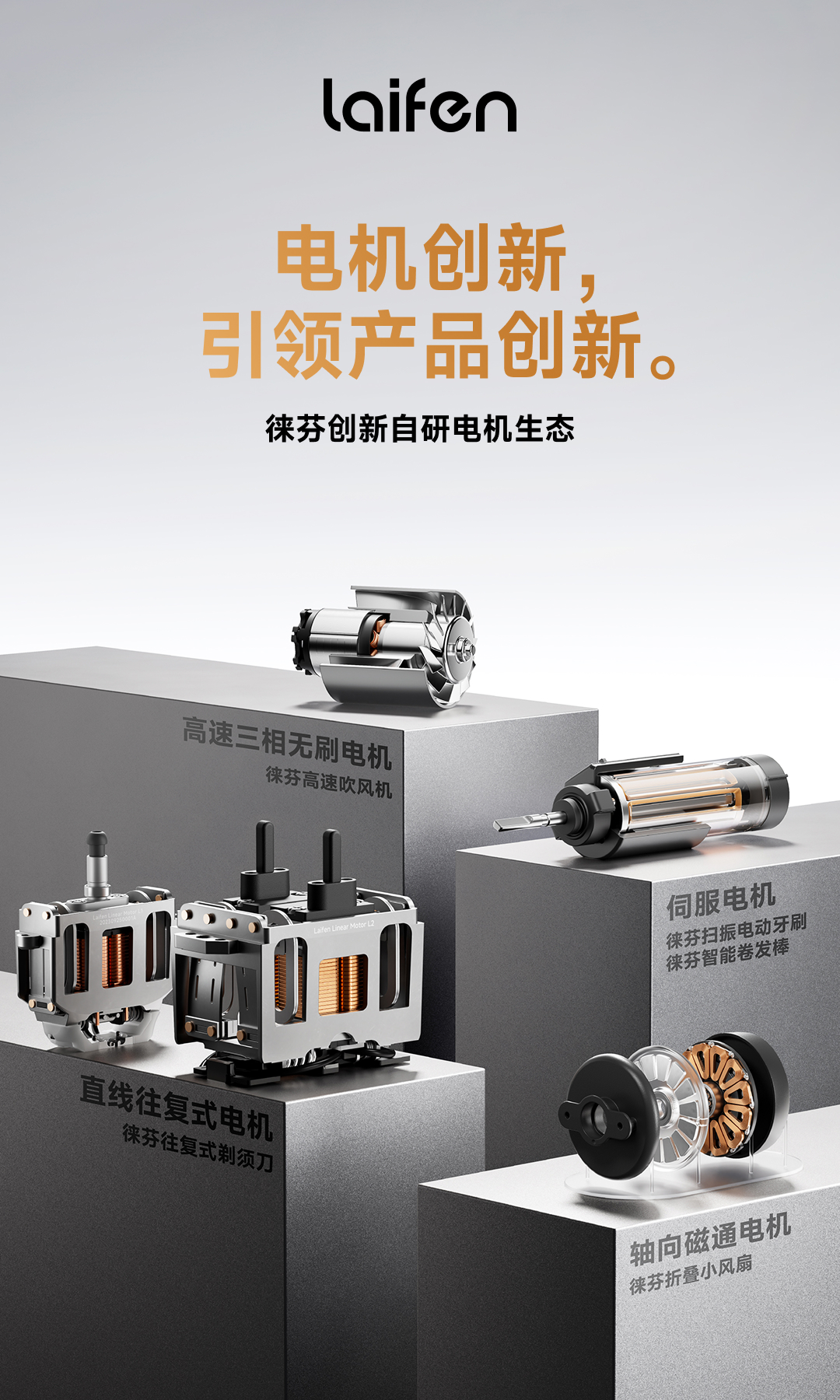
**3. Every Laifen product is the "right answer" dropped, smashed, and tested into existence** Inside the "reliability laboratory" of the Zhuhai super factory, one can see with the naked eye: electric toothbrushes tumbling and falling, over and over, inside rotating drums; in constant temperature and humidity chambers nearby, shavers and electric toothbrushes endure repeated tests of high heat, extreme cold, and dampness. These micro-scenarios from consumers' daily lives—slipping from a wet hand, exposure to hot steam, extreme humidity—are broken down into thousands or tens of thousands of repetitions, happening again and again. Covering roughly 3,000 square meters, Laifen's reliability laboratory is divided into five major testing zones: environmental, mechanical, performance, safety and compliance, and failure analysis. Nearly 70 laboratory professionals conduct over 100 reliability tests across areas such as environmental stress, mechanical strength, aging lifespan, and electrical performance. While the industry standard may be around 20-plus tests, Laifen chooses to run more than 100—because for consumers, a product must remain stable after years of use. More critically, every set of test results from the reliability laboratory is fed back into product design, material selection, structure, and functional optimization—allowing products to rehearse scenarios ever closer to real-world use before mass production. Based on this high-intensity testing system, Laifen's overall product yield is above the industry average: the yield rate of its high-speed brushless motors exceeds 98%, while that of the self-developed servo motor in its second-generation toothbrush exceeds 99.6%. At Laifen, reliable products are literally "dropped" into existence. Behind every Laifen product is the right answer, continuously corrected after tens of thousands of falls and impacts. 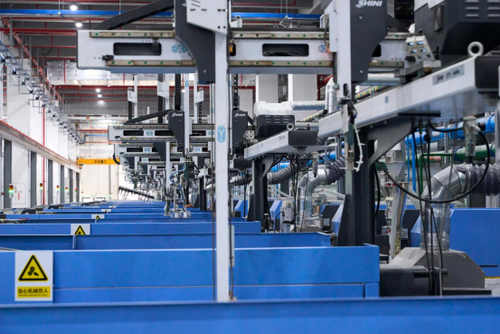
**4. From molding to delivery: a precision manufacturing chain with "invisible stability"** Beyond the motor workshop and the reliability laboratory, Laifen extends the same extreme standards to every process in a product's creation. In the precision molding workshop, Laifen has built a hundred-million-yuan-level integrated precision molding production line. Through automated operations, intelligent quality control, and digital traceability, quality management is moved up front to the very first scene of part formation. Relying on imported high-precision equipment combined with self-developed software and hardware coordination, the line achieves both micron-level machining accuracy and mass-production capacity in the hundreds of millions of parts—giving core components higher consistency and stability from the source. The spraying stage is key to Laifen's stable product texture. Laifen built its own spraying line, featuring a 100,000-class dust-free cleanroom, with the automated spray booths reaching a 10,000-class cleanliness standard, reducing the impact of dust particles on paint finish. Meanwhile, an automatic dual-component spray-gun system enables rapid switching between colors and process requirements, boosting spraying efficiency by roughly 40% and achieving a mass-production yield rate of about 97%—ensuring consistent color, gloss, and feel across different batches. In assembly and brush-head production, the bar is raised even higher. As products in direct daily contact with the mouth and skin, electric toothbrushes and brush heads are produced to a 1,000-class cleanliness standard. For brush-head disinfection and sterilization, Laifen employs a fully automated, no-human-contact process, with robotic arms and ozone sterilization cycles completing the entire operation. This fully automated brush-head sterilization system—leading the industry—eliminates contamination variables from manual handling, making cleanliness and sterilization more stable and controllable, and bringing the pre-shipment cleanliness standard of a single brush head up to the level of precision electronics and medical device production lines. Consumers may not see these details, but they will certainly feel them over long-term use. The so-called "invisible stability" means that every time a consumer picks up a product, they experience the same consistently high quality. To genuinely safeguard consumer rights and eliminate doubts around purchase and after-sales service, Laifen recently announced a two-year replacement-only (no repair) after-sales policy for its entire i2 electric toothbrush series (handles)—no preconditions, no fine print, no tricks. It is understood that this is currently the highest-tier service standard in the industry. 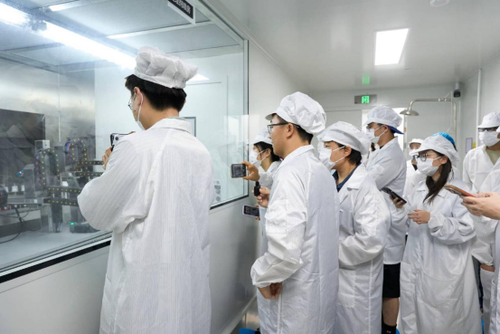
**5. From high-end manufacturing to consumer trust: a factory's long-term answer** Throughout this field visit, what Laifen wanted to showcase was not "we have a factory," but to answer a more fundamental question: why can it keep launching good products? The answer lies neither in a burst of inspiration in the R&D department, nor in the accidental success of a single product. It lies in whether insight, design, R&D, manufacturing, testing, and feedback can truly be connected. The value of Laifen's Zhuhai super factory is precisely in stringing these originally fragmented capabilities together: consumer insights feed into R&D and design; R&D results flow into manufacturing; manufacturing feedback loops back into R&D; and big data drives the next round of product iteration. This is also why Laifen chose to build its own factory—to give every product innovation the support of capabilities that can be implemented, verified, and sustainably replicated. In this sense, the Zhuhai super factory is not merely a production base; it is Laifen's systematic answer to quality, innovation, and long-termism. Looking globally, the brands that remain trusted after decades or even centuries almost all share one thing in common: they hold their core technologies and processes firmly in their own hands, self-developing and self-producing, personally overseeing quality. Take Japan's Tiger Corporation, for example—a century-old company focused on thermal insulation and cooking appliances. Its core technologies, such as vacuum insulation, precise heating and temperature control, and earthenware inner pots, are all developed in-house, and it builds its own factories to handle manufacturing and quality control, keeping quality firmly at the very top of the supply chain. Industry observers note that this is a matter of the underlying logic of manufacturing. When a company chooses the "heavy-asset" route of building its own factories or producing core components itself, its core value goes far beyond simply "controlling quality"—it becomes the physical embodiment of a technology moat, absolute control over the supply chain, and the trust foundation of brand premium. For Laifen, true brand or product trust is not a line in a marketing slogan—it lives in every motor, every test, every process, and every consistent delivery. The importance of this newly commissioned super factory to Laifen is self-evident. From a high-speed motor to a drop test; from a coat of sprayed color to the cleanliness standard of a brush head before it leaves the factory—the true quality of a product doesn't only happen in the moment the user first sees it. Long before that, in every process on the factory floor, it has already been verified, corrected, and confirmed, again and again. 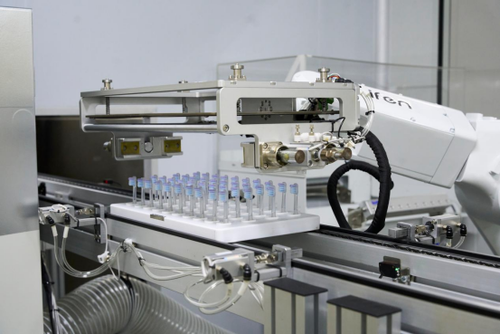
*Source: Wangcai Motor & Electric Control (旺材电机与电控)*
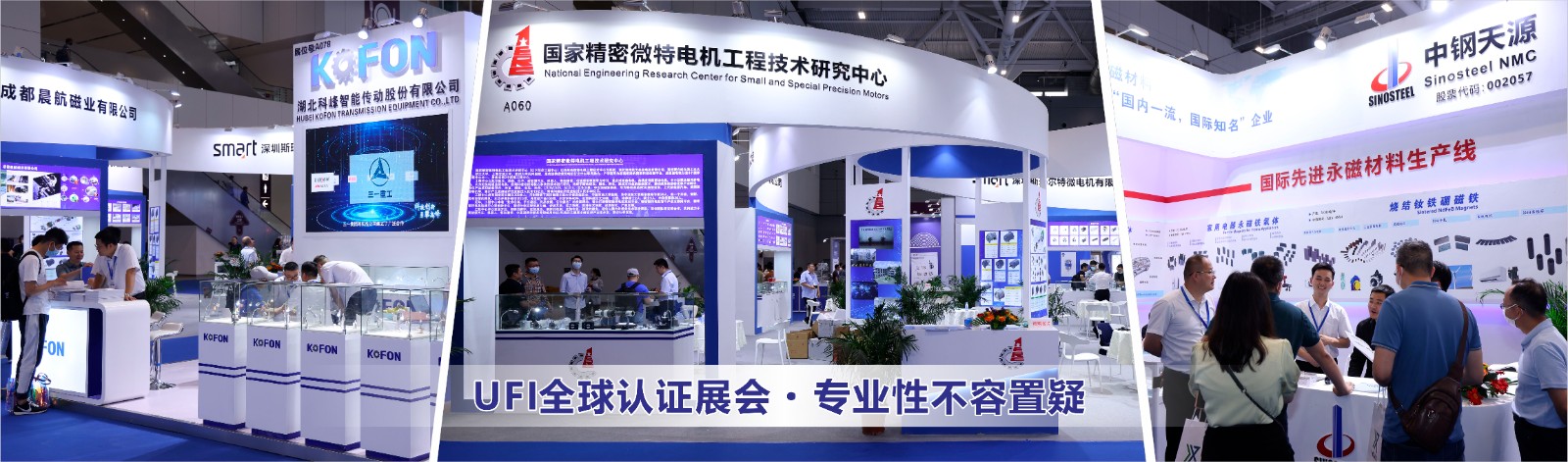
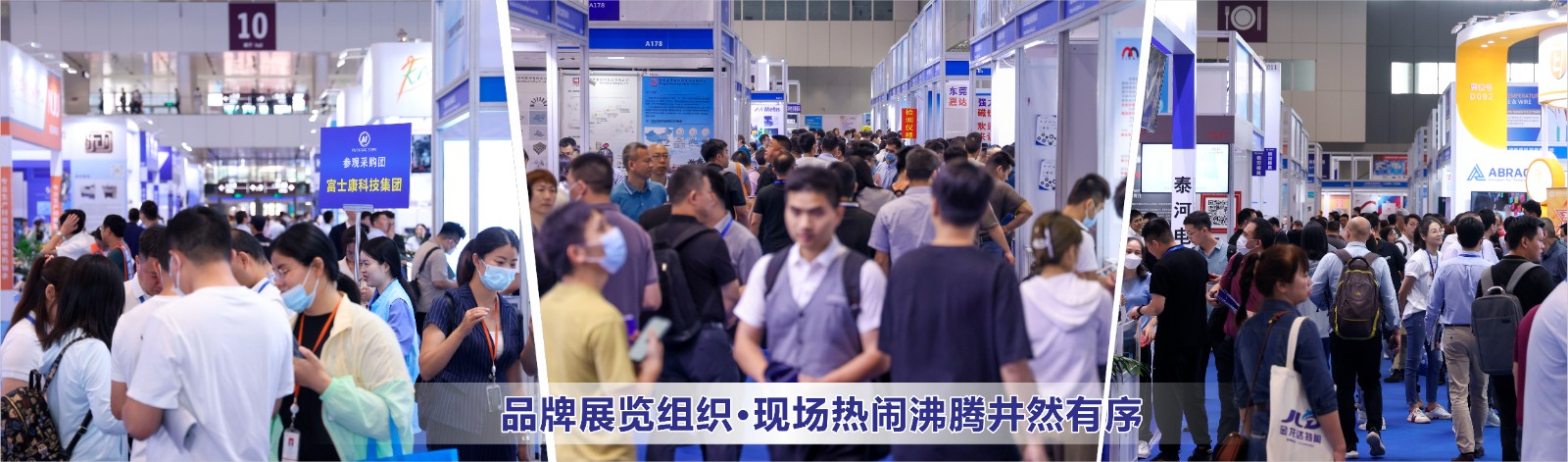
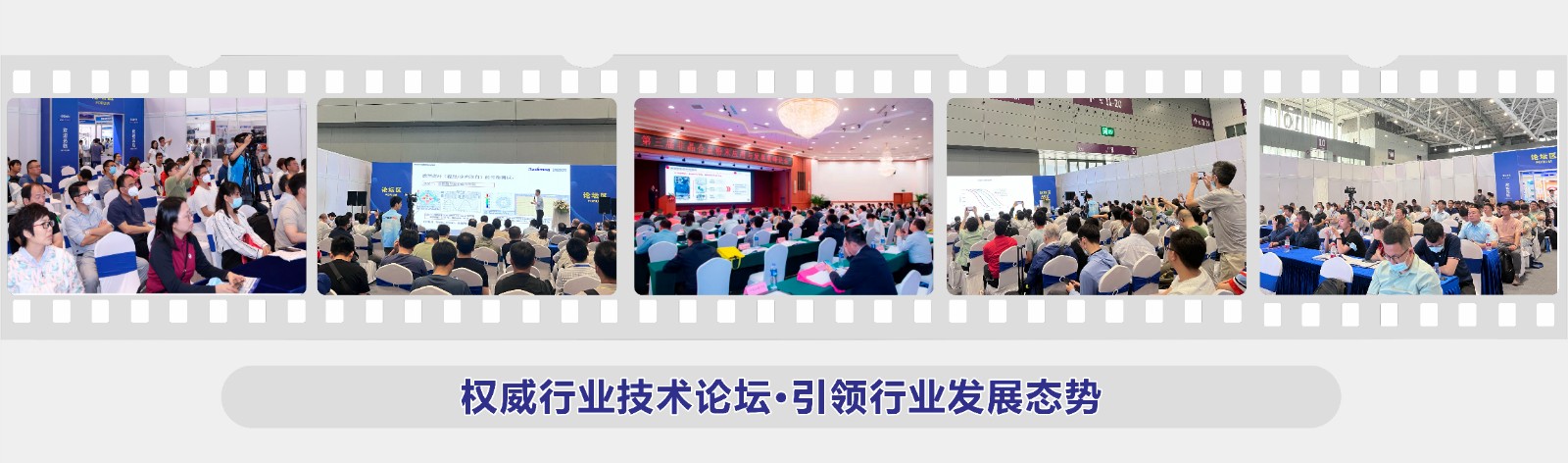
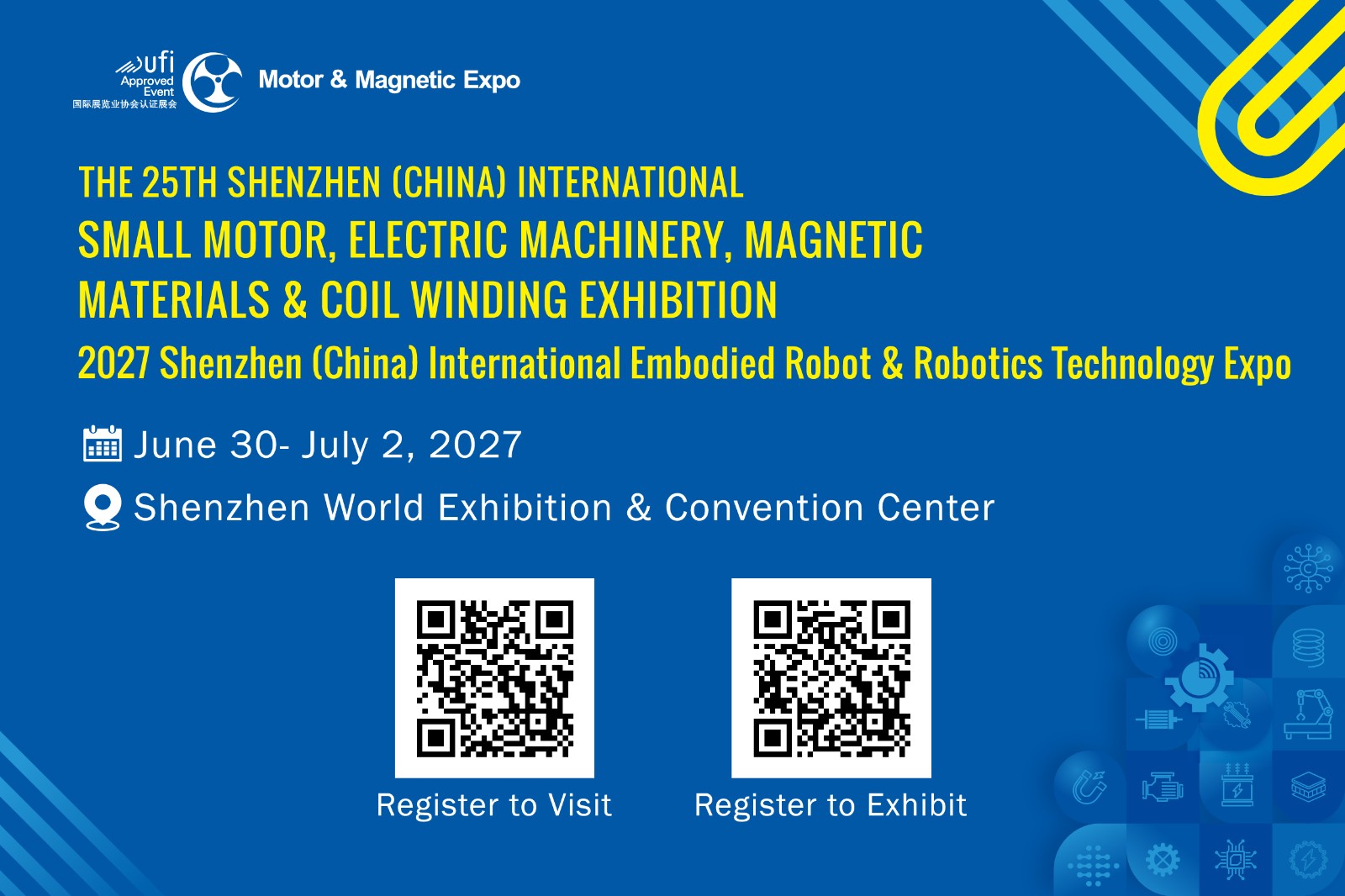
The 25th Shenzhen (China) International Small Motor, Electric Machinery, Magnetic Materials & Coil Winding Exhibition Web: http://motor-expo.cn/En/ Register as an exhibitor: http://e.zbase.cn/50e3726e
Register as a visitor: http://e.zbase.cn/cb37d8db
Natalie (Manager of International Department)
Twitter: MagmotorExpo
LinkedIn: Natalie Liang
Youtube: MagmotorExpo 
|